The first time you sold something you made with your own hands, you felt proud. Someone chose your work, paid for it, and carried it home. Then a few months later you looked at your bank account and wondered where the money went. You had sales. You had orders. So why did so little remain?
If you have ever wondered how to price handmade products without quietly losing money, here is the truth. You are not bad at business. You are missing three numbers.
You do not need an accounting degree. You do not need a bookkeeper. You do not need a fifty-page business plan. You need to know what your product truly costs you to make, the lowest price you can charge without losing money, and the margin that tells you whether this is a business or an expensive hobby funded by your own time.
This is not a finance lecture. It is a clarity guide. By the end, you will have those three numbers and one concrete action you can take today.
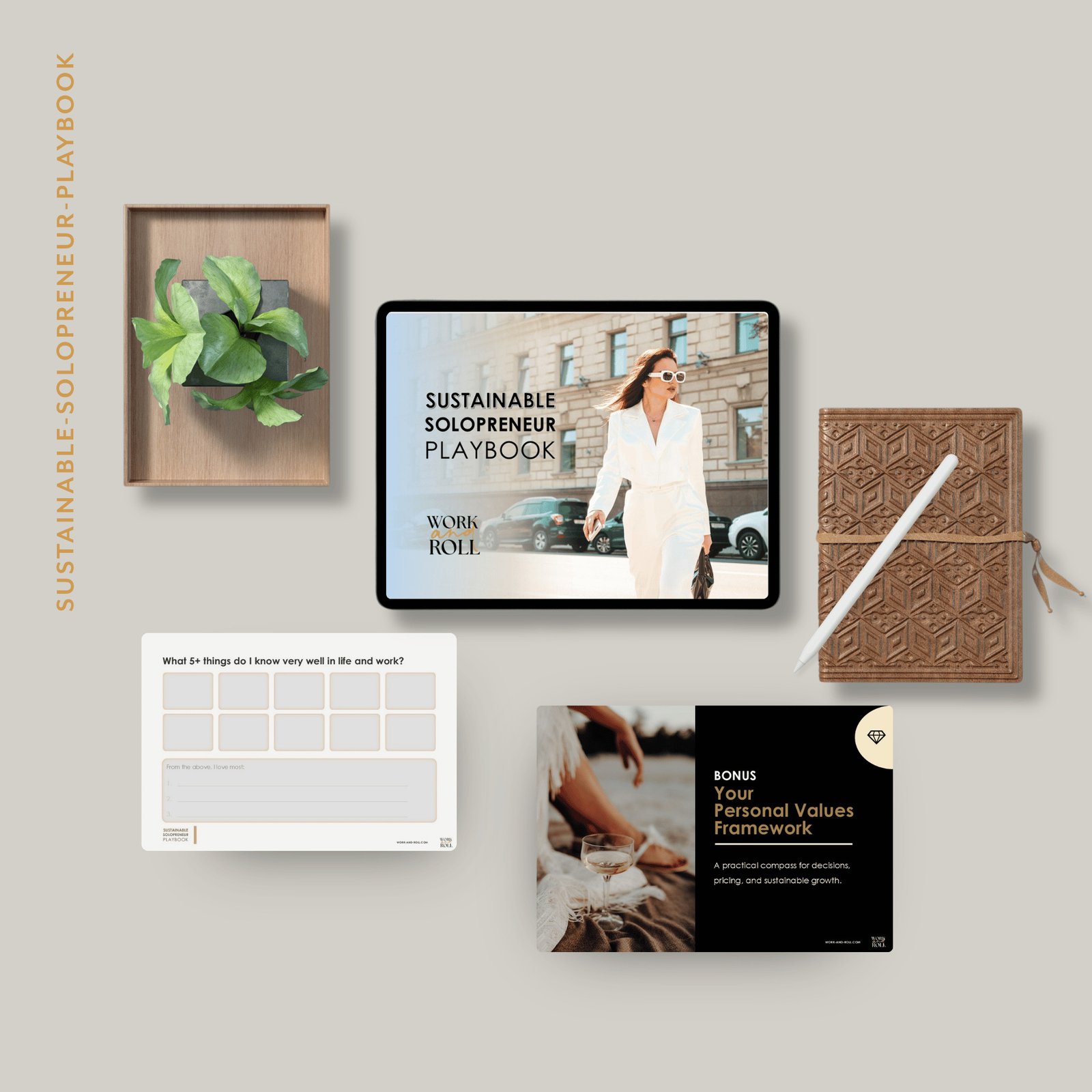
If you want to start your journey the right way, download the free Sustainable Solopreneur Playbook and be honest with yourself for best results.
Why What Feels Fair Is Costing You More Than You Think
Pricing your handmade products by what feels fair usually costs you money, because it ignores the platform fees and hidden costs that come out of every sale before you ever see it.
Most makers set prices one of two ways. You look at what others charge and match them. Or you pick a number that does not feel greedy. Both feel responsible. Both leave money on the table, because neither one starts with what the item actually costs you to make.
None of these platforms are the villain here. You went to them because they put your work in front of buyers you could not reach on your own, and that was a reasonable choice. The problem is not that the fees exist. The problem is pricing as though they do not.
The European Realities That Make This Even Harder
Selling handmade products in Europe carries three costs the marketplace rarely puts in front of you.
- Fee stacking eats lower-priced items hardest. Etsy layers a listing fee, a transaction fee, and payment processing, and can add an advertising fee on top. On lower-priced items, these stack into a meaningful share of the sale. If you price to break even at your sticker price, you can still sell at a loss once every fee is counted.
- Shipping is a real cost, not a rounding error. It is easy to absorb shipping to look competitive without ever adding it to the product. The honest way to know your real number is to check it. The European Union runs an official parcel price comparison tool listing cross-border rates from more than 300 providers for parcels up to 5 kilograms. Use your true route and put that figure inside your cost, not beside it.
- VAT has a milestone, not a cliff edge. You are probably not registered for VAT when you start, and you may not need to be for a while. Across the European Union there is a single threshold of 10,000 euros per year for cross-border sales to consumers in other member states, cumulative across the whole EU, not per country. Below it, you charge your home-country VAT rate. Above it, you charge the destination-country rate through the One Stop Shop. As of 1 July 2026, that system covers more types of sales than before. This is a signpost, not a threat.
The Maker's Margin Map: A Three-Number Framework
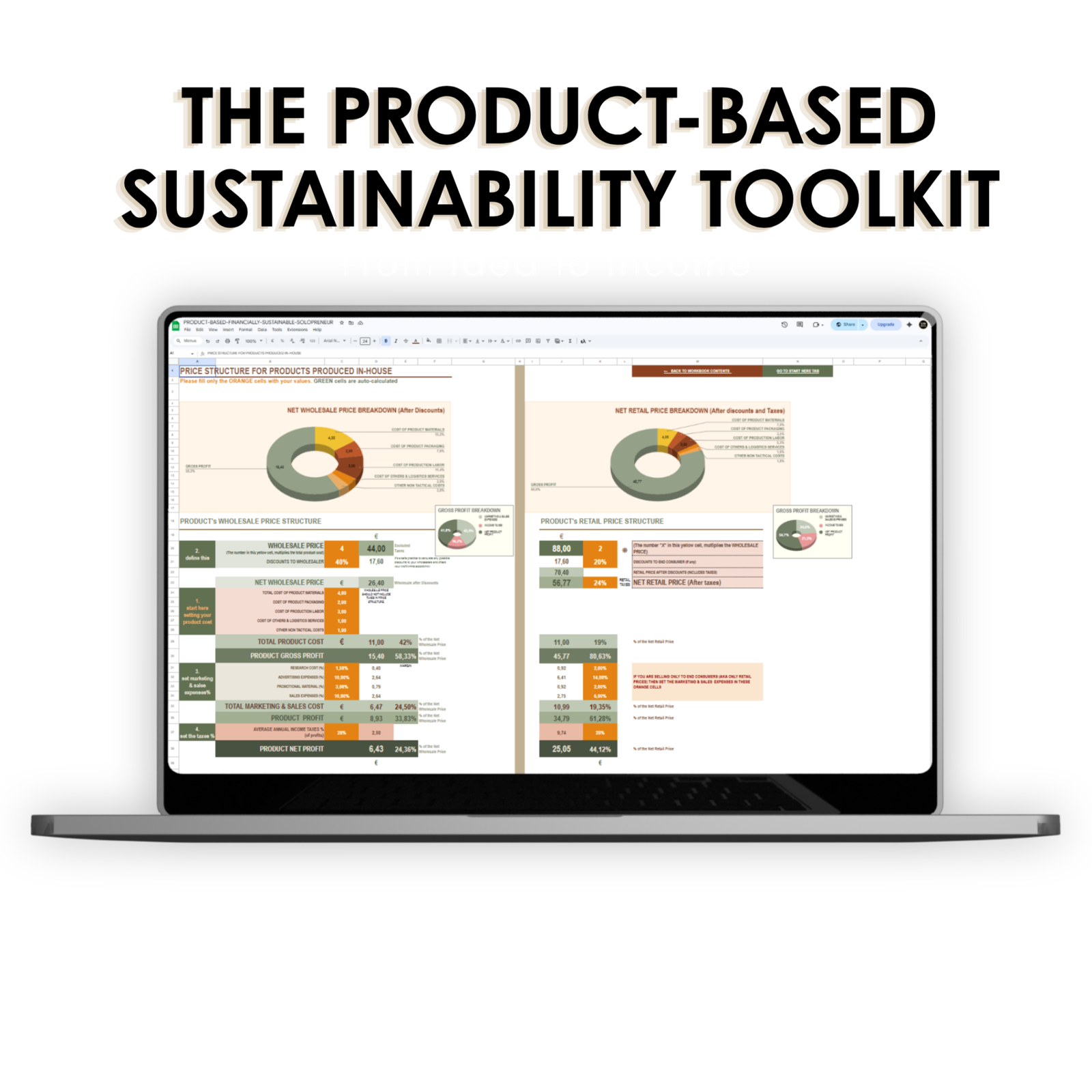
The Maker's Margin Map shows what a product truly costs you, the lowest price you can charge without losing money, and whether your business is building anything beyond covering costs. You run one product through three numbers. That is the entire method, and it takes under thirty minutes on paper.

Total Time Needed :
20
Minutes
Required Tools:
Only follow the three simple steps:

This is everything it takes to make and deliver one item: materials, packaging, platform fees, shipping if you pay it, and your own time at an hourly rate you decide
Ask yourself: “If I paid myself fairly for every hour, what would this item actually cost me?”
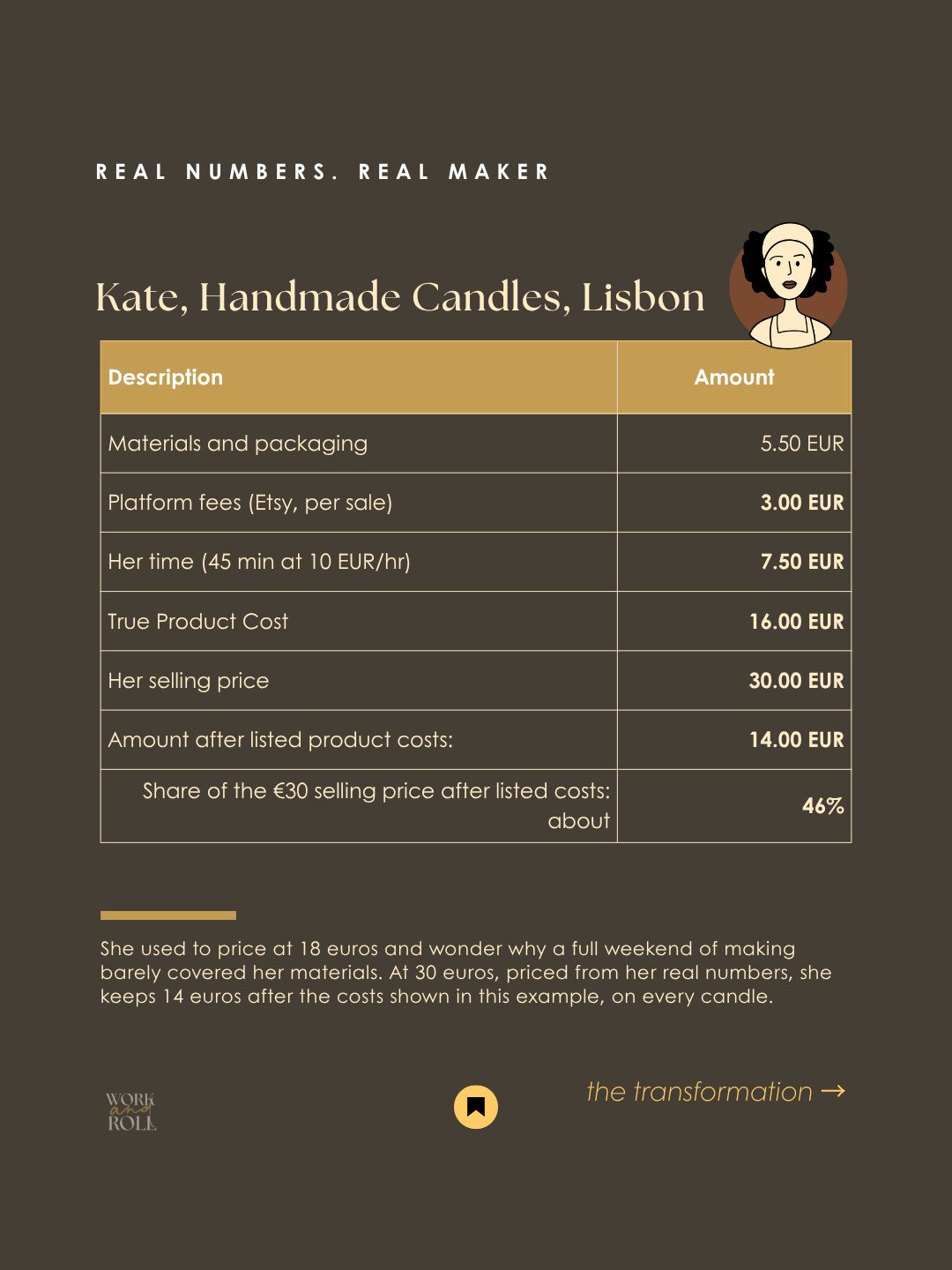
Example: a soy candle. Materials 4.50 euros. Packaging 1 euro. Platform fees on a 25 euro sale about 3 euros. Forty-five minutes of your time at 10 euros an hour is 7.50 euros. True Product Cost: about 16 euros.

This is your True Product Cost plus a minimum profit buffer, typically 20 to 30 percent.
Ask Yourself: “What is the lowest price I can charge and still not lose money?”
Example: 16 euros plus a 25 percent buffer is about 20 euros. Anything below that means you are paying for the privilege of selling your own work.

Margin is the share of the selling price that remains after your costs. It answers the real question, not just whether you covered costs, but whether the business is building something.
Ask Yourself: : “At what I actually charge, how much of this sale is truly mine?”
Example: If you sell the candle at 30 euros and you keep about 14 euros, a gross profit margin of 46%, is healthy. (€30-16€=14€ Gross profit = 14 ÷30 = 0.47*100 = 46%). Even if you will absorb 10 euros of Ads fee on top, the candle can still pay you 4€.
What Financial Clarity Actually Feels Like (and What to Do Next)
Financial clarity is not about knowing more accounting. It is about removing the background anxiety that comes from making pricing decisions without knowing your real numbers.
That anxiety is expensive. It costs you sleep. It costs you confidence in pricing what you make. It costs you the ability to make deliberate decisions about your business instead of hoping it works out.
When you know your true numbers, something shifts. You stop reacting because you understand what is actually happening, and where your money goes. You stop dreading the moment you check your bank balance, and start understanding it. That shift does not require a transformation. It requires one clear framework and thirty honest minutes with one product.
Pick one product you sell now, or plan to sell. Write down your materials and packaging, your platform fees, your shipping, and your time at an hourly rate you are willing to name out loud. Add them up. Compare that number to what you charge today. If the gap is uncomfortable, that discomfort is information, not judgment. You have been carrying a cost you could not see. Now you can see it, and seeing it is the whole point.
Your next steps: